 Image 1 of 4
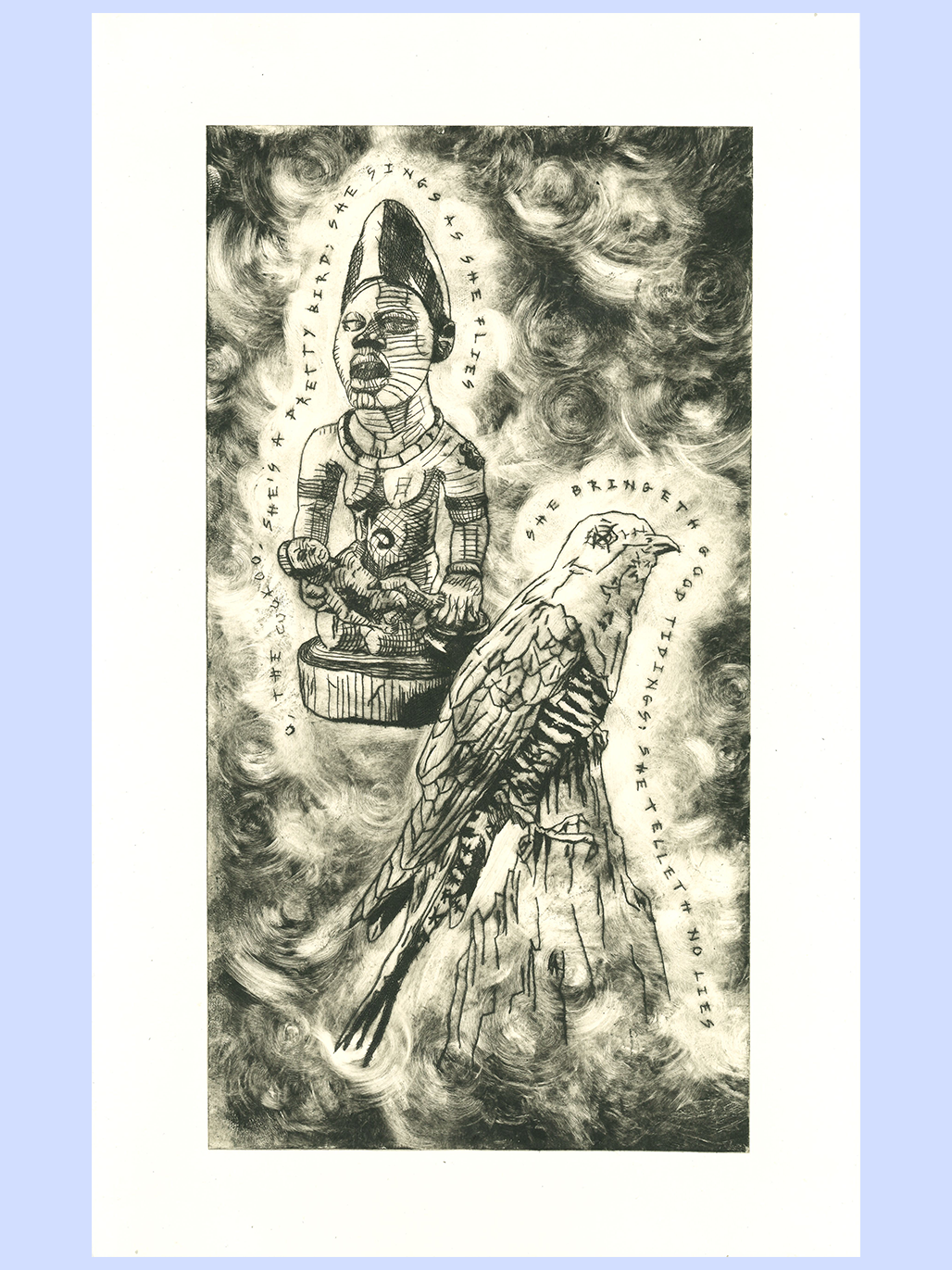 Image 2 of 4
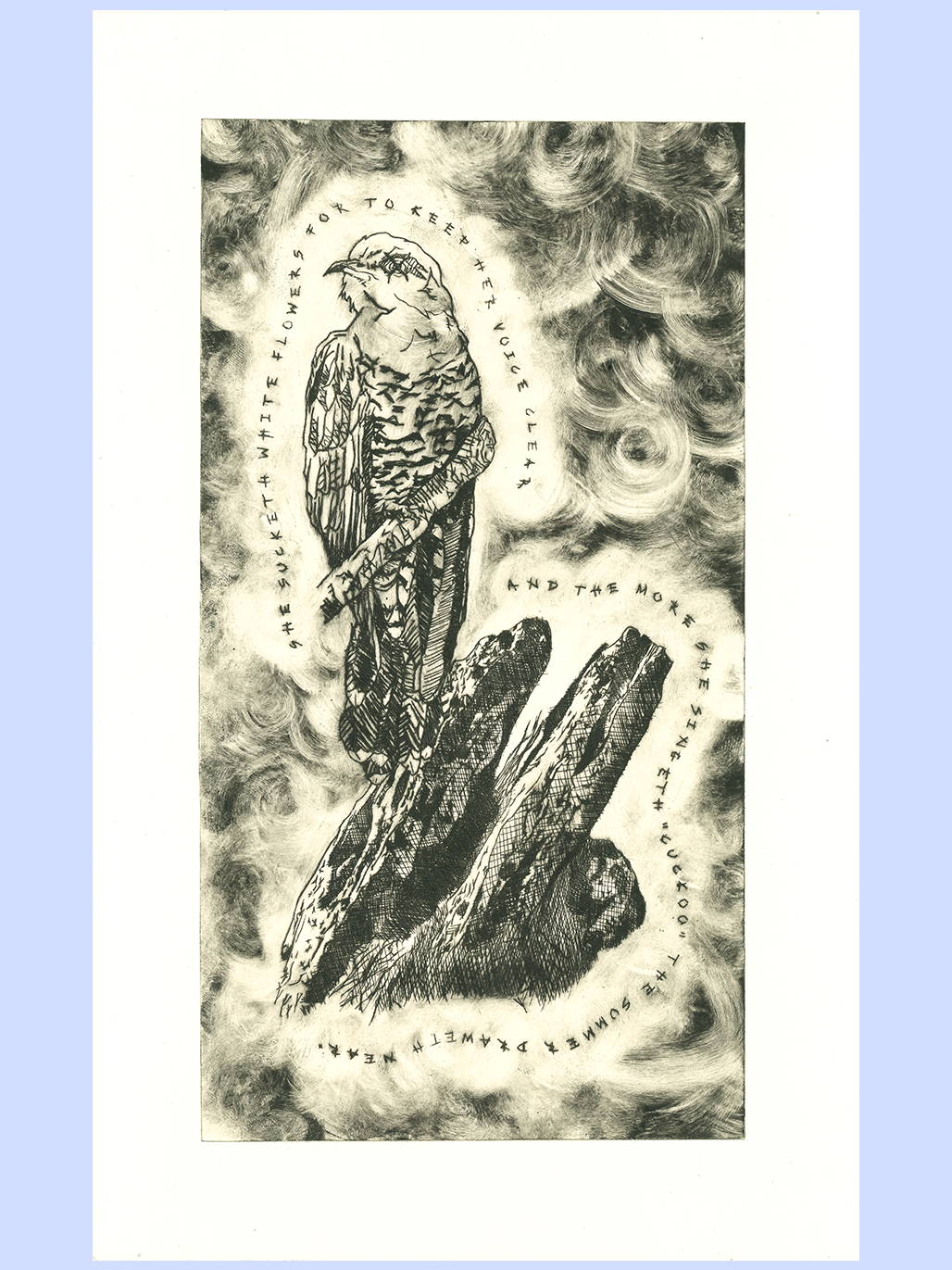 Image 3 of 4
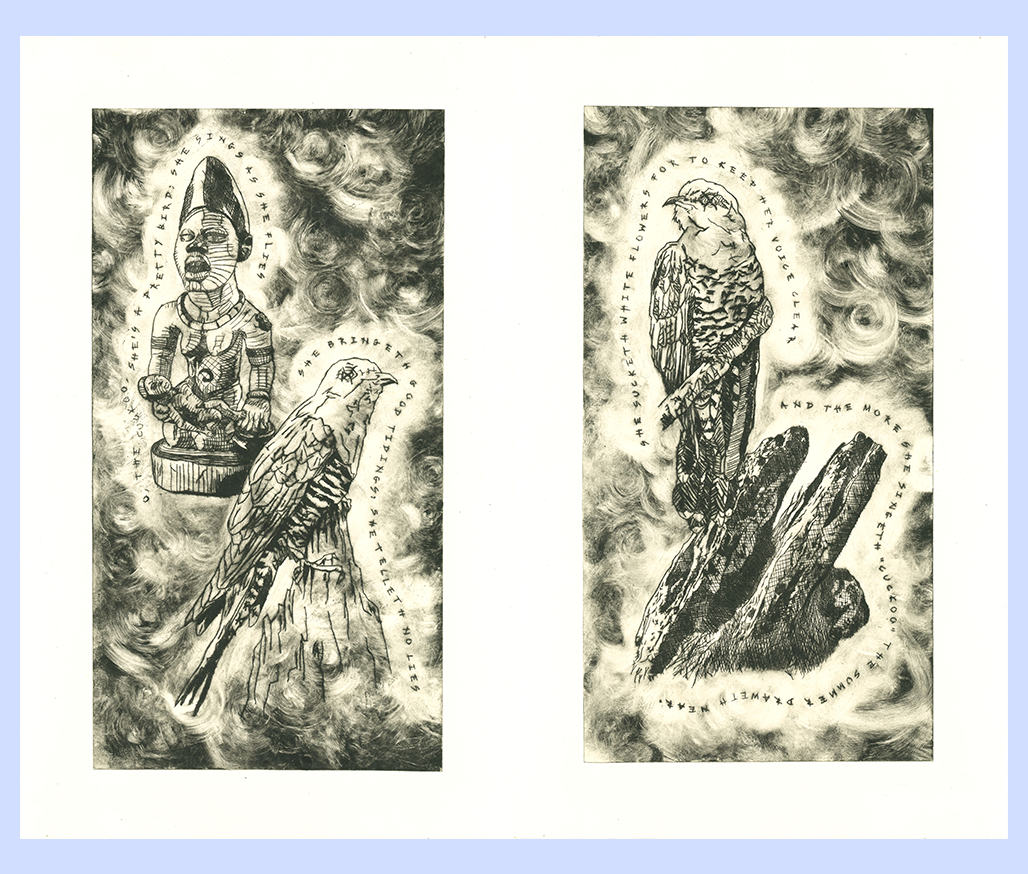 Image 4 of 4
Handmade drypoint etching print on Somerset satin paper.
Dimensions: Diptych is 560 × 458mm / individuals panels are 280 x 458mm (A4)
Paper weight: 300gsm
Variable edition of 5 monoprints. Please contact me to view the available editions before purchasing.
The common cuckoo is a migratory bird that arrives in Britain around April time. For centuries it’s been seen as a harbinger of spring and a symbol of new beginnings. The cuckoo is steeped in folklore. To hear the first call of the cuckoo in spring was said to bring you good luck, whereas to hear a cuckoo after midsummer while in bed was a bad omen.
The cuckoo makes its long migration from the Congo rainforest in central Africa. It’s a journey that it has been making for thousands of years. what’s fascinating is that the cuckoo arrives in the Congo around august – the region’s rainy season – and it too is seen as a symbol of fertility by central African tribes.
Sadly, the cuckoo’s numbers are rapidly declining in the uk. This is due to effects of the climate crisis. Cuckoo’s are unable to advance the timing of their spring migration to keep pace with northern hemisphere springs which are starting earlier due to global warming.
Recent studies have revealed the migration route of cuckoos cross the saharan desert and mediterranean via either Italy or Spain. it’s along this long route that many of them are perishing as they become increasingly out of synch with prey availability in stopover sites to fuel for northwood journeys.
If we consider the ongoing migrant crisis from Africa, in part fuelled by climate breakdown, we see direct parallels between the declining population of cuckoos and the tragic deaths of human migrants along the same routes. Both are victims of a extractivist capitalism begun and maintained by western powers.
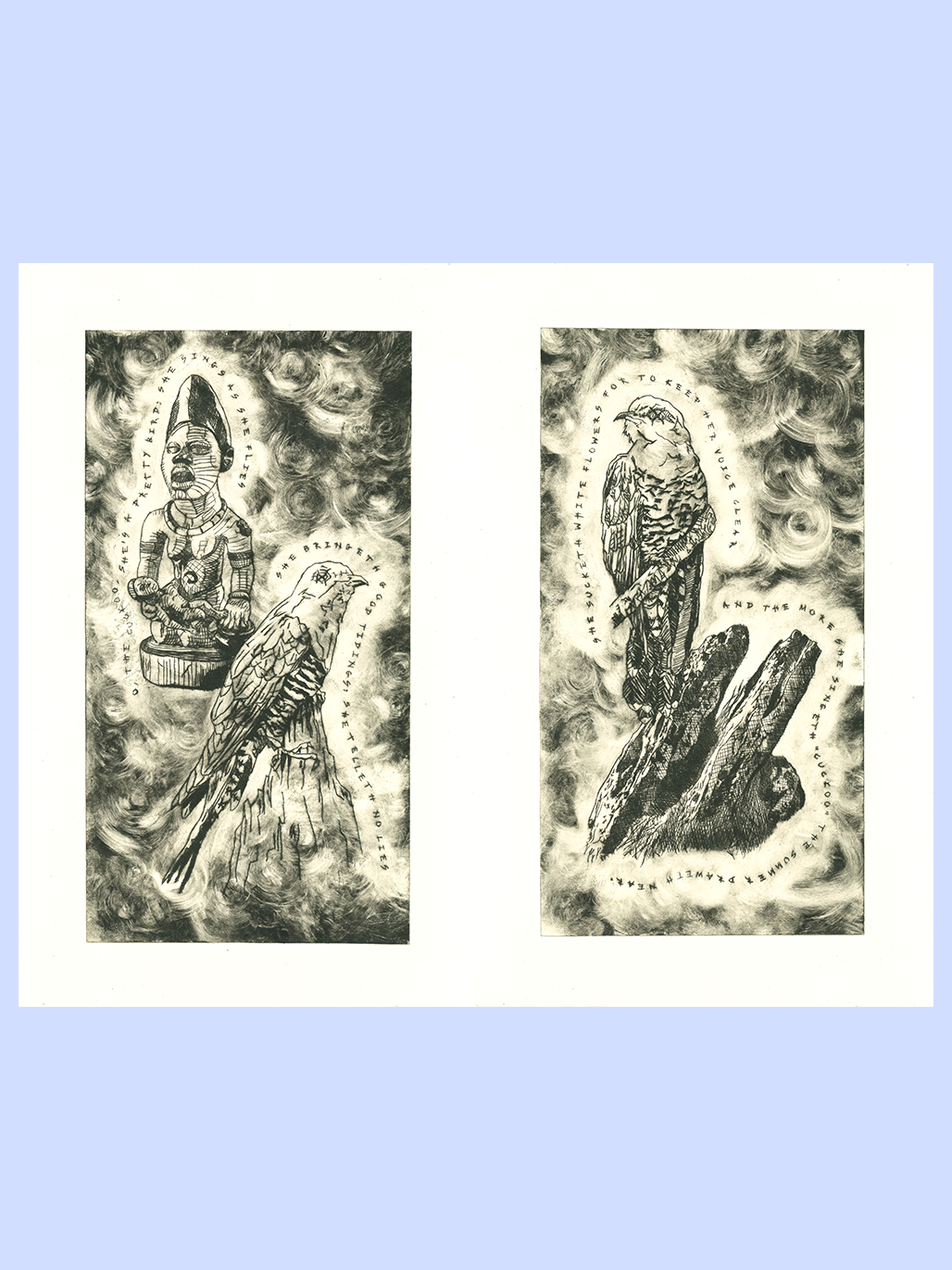
My diptych features two cuckoos alongside a phemba and a cuckoo stone surrounded by the first verse from ‘the cuckoo’, an old english folk song.
A phemba is a Yombe maternity figure from the old Kingdom of Kongo. It depicts a mother and child and is a symbol of fertility often used in tribal rituals. A cuckoo (or gowk) stone is a form of standing stone found across Britain. It remains unclear what the connection between the cuckoo and the stone is, however, research has revealed that their naming dates back to the 5th century with evidence to suggest their association with the cuckoo may come from the neolithic period.
Additional information:
These prints are part of a variable edition, meaning that the same plate has been used but each print is individually unique due to intentional variations.
The colours may differ slightly from your monitor.
Designed and made in the UK, Lewis Toumazou © The artist retains the copyright.
Handmade drypoint etching print on Somerset satin paper.
Dimensions: Diptych is 560 × 458mm / individuals panels are 280 x 458mm (A4)
Paper weight: 300gsm
Variable edition of 5 monoprints. Please contact me to view the available editions before purchasing.
The common cuckoo is a migratory bird that arrives in Britain around April time. For centuries it’s been seen as a harbinger of spring and a symbol of new beginnings. The cuckoo is steeped in folklore. To hear the first call of the cuckoo in spring was said to bring you good luck, whereas to hear a cuckoo after midsummer while in bed was a bad omen.
The cuckoo makes its long migration from the Congo rainforest in central Africa. It’s a journey that it has been making for thousands of years. what’s fascinating is that the cuckoo arrives in the Congo around august – the region’s rainy season – and it too is seen as a symbol of fertility by central African tribes.
Sadly, the cuckoo’s numbers are rapidly declining in the uk. This is due to effects of the climate crisis. Cuckoo’s are unable to advance the timing of their spring migration to keep pace with northern hemisphere springs which are starting earlier due to global warming.
Recent studies have revealed the migration route of cuckoos cross the saharan desert and mediterranean via either Italy or Spain. it’s along this long route that many of them are perishing as they become increasingly out of synch with prey availability in stopover sites to fuel for northwood journeys.
If we consider the ongoing migrant crisis from Africa, in part fuelled by climate breakdown, we see direct parallels between the declining population of cuckoos and the tragic deaths of human migrants along the same routes. Both are victims of a extractivist capitalism begun and maintained by western powers.
My diptych features two cuckoos alongside a phemba and a cuckoo stone surrounded by the first verse from ‘the cuckoo’, an old english folk song.
A phemba is a Yombe maternity figure from the old Kingdom of Kongo. It depicts a mother and child and is a symbol of fertility often used in tribal rituals. A cuckoo (or gowk) stone is a form of standing stone found across Britain. It remains unclear what the connection between the cuckoo and the stone is, however, research has revealed that their naming dates back to the 5th century with evidence to suggest their association with the cuckoo may come from the neolithic period.
Additional information:
These prints are part of a variable edition, meaning that the same plate has been used but each print is individually unique due to intentional variations.
The colours may differ slightly from your monitor.
Designed and made in the UK, Lewis Toumazou © The artist retains the copyright.